

 See My Latest Article on HelloNation
What is the difference between live bee removal and eradication?
Live bee removal relocates a honey bee colony without intentionally killing it. Eradication eliminates the colony at its current location, usually because the nest presents a safety risk or cannot be removed safely.
The two approaches address the same basic problem—a honey bee swarm or colony in an unwanted place—but they involve different methods, risks, legal requirements, and follow-up work.
In Florida, live removal is generally performed by a registered beekeeper. Eradication of a nuisance honey bee colony is considered pest control and is generally limited to a licensed pest control operator. Property owners may choose between the two options, although the location and condition of the colony can make one approach more appropriate than the other.
What happens during live bee removal?
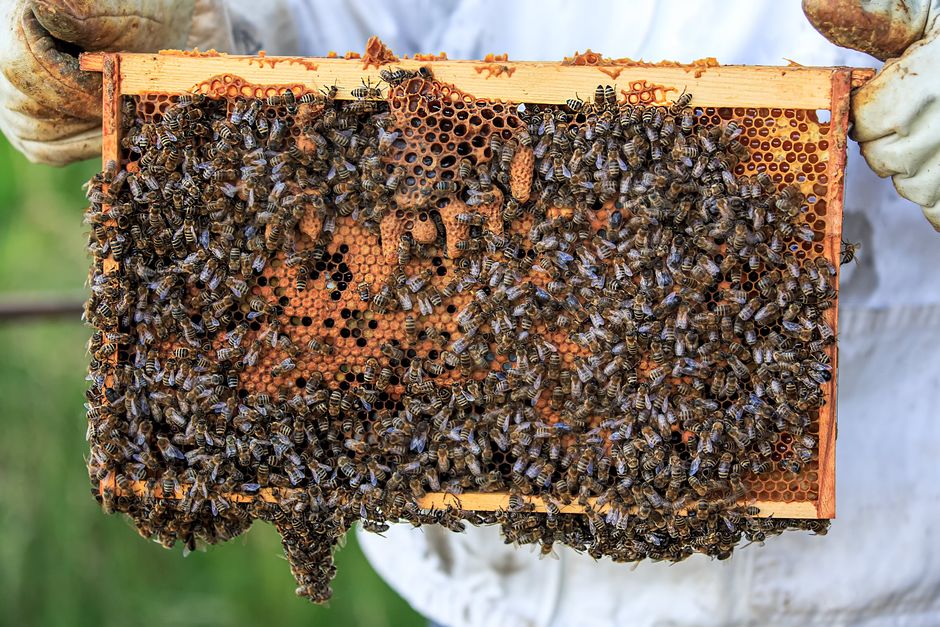
Live removal involves taking the entire colony out of the unwanted location and relocating it as a managed colony. A complete removal usually includes:
- The adult bees
- The queen
- Wax comb
- Brood, including eggs and developing bees
- Stored honey and pollen
- Bees hidden in cracks, cavities, or nearby structures
A simple swarm gathered on a tree branch is often easier to collect because the bees have not yet built a permanent nest. An established colony inside a wall, soffit, roof edge, utility enclosure, or tree cavity requires more extensive work.
The removal process may involve opening part of a structure, cutting out comb, transferring bees into a hive container, and checking the area for remaining bees. Any comb and honey left behind can attract other bees, ants, roaches, rodents, and moisture-related problems. For that reason, removing the visible bees alone is not always a complete solution.
Live removal is not automatically harmless. A colony may defend its brood, food stores, and queen, especially when the nest is disturbed. Africanized honey bees are established in southern Florida, and their appearance cannot be reliably distinguished from other honey bees by looking at individual insects. Temperament, location, colony size, and the presence of people or animals all matter.
What does eradication involve?
Eradication means eliminating the colony rather than preserving it. This may be considered when bees are nesting in a dangerous or inaccessible location, such as:
- Near a doorway, walkway, playground, or frequently used outdoor area
- Inside an occupied wall or ceiling
- High in a tree where safe access is not possible
- Near people or animals who may be exposed to repeated stinging
- In a structure that cannot be opened without creating greater hazards
- In a colony showing unusually defensive behavior
Eradication does not necessarily end the problem immediately. Dead bees, wax, honey, and brood may remain in the cavity. If those materials are not removed or sealed properly, the odor and residue can attract new insects or encourage another colony to occupy the same space.
Eradication also does not mean that every bee in the area disappears at once. Foragers may be away from the nest when treatment occurs and can return later. The entry point may need to be monitored and sealed after activity has ended.
Is a bee swarm the same as a hive?
No. A swarm is a temporary cluster of bees that has separated from an established colony, usually while searching for a new nesting location. It may hang from a branch, fence, eave, sign, or other surface for several hours or days.
A hive or established colony has a permanent nest containing comb, brood, honey, and pollen. Bees entering a wall opening or repeatedly flying into a small gap may indicate that a colony has already established itself inside.
This distinction affects the available options. A visible swarm may be collected with limited disturbance to a building. A colony inside a structure often requires opening the cavity and removing the nest materials. Treating a swarm as though it were an established hive—or assuming a hidden colony is only a temporary swarm—can lead to incomplete work.
Which option is better for homes in Miami, FL?
There is no universal answer. Live removal may be suitable when the colony can be reached safely, the bees can be contained, and the entire nest can be removed. Eradication may be more appropriate when access is dangerous, the colony is highly defensive, or nearby residents and animals face an immediate stinging hazard.
The warm, humid climate and long growing season in Miami allow honey bees to remain active for much of the year. Buildings with open soffits, roof gaps, masonry voids, irrigation features, unused equipment, and shaded cavities can provide attractive nesting spaces. Tropical storms and heavy rain may also drive bees toward protected spaces in buildings and outdoor structures.
A colony that seems quiet during a brief observation may still become defensive when its nest is disturbed. Activity can change with weather, time of day, nearby lawn work, vibrations, pets, and attempts to block the entrance.
Can residents remove a colony themselves?
Homeowners should not spray, smoke, seal, cut into, or otherwise disturb an active honey bee colony without proper training and protective equipment. A partial attempt can force bees into the living space, scatter them into nearby yards, or leave comb and honey hidden inside a wall.
Sealing an entrance while bees remain inside is especially problematic. The bees may search for another exit, sometimes emerging through electrical openings, vents, light fixtures, or interior wall cracks. Trapped honey can also leak into building materials and create persistent odors and damage.
People with known sting allergies, children, older adults, pets, and anyone with limited mobility should be kept away from the area. Windows and doors near the activity should remain closed, and outdoor work such as mowing or trimming should stop until the situation is assessed.
What should property owners ask before work begins?
The legal distinction between removal and eradication matters in Florida. A person performing live honey bee removal should be registered with the Florida Department of Agriculture and Consumer Services. Eradication is generally performed by a licensed pest control operator.
Before authorizing work, property owners should ask:
- Is the work live removal or eradication?
- What happens to the bees, comb, brood, and honey?
- How will the entrance be sealed afterward?
- Could walls, ceilings, soffits, or roofing require repair?
- How will returning forager bees be handled?
- What registration or license applies to the work?
- What precautions will protect neighbors, pets, and passersby?
A useful answer should address both the bees and the structure. Removing insects without correcting the nesting access can allow a new colony to occupy the same location later.
How can future nesting be reduced?
Bee-proofing is the most practical long-term prevention. Once a colony has been removed or eradicated, inspect the property for gaps and cavities that could provide shelter.
Common preventive measures include:
- Repairing damaged soffits, fascia, roof edges, and vents
- Screening openings while preserving necessary airflow
- Sealing gaps around pipes, conduits, and utility penetrations
- Replacing deteriorated wood or loose masonry
- Removing abandoned boxes, containers, and equipment that can shelter swarms
- Checking tree cavities and outdoor structures periodically
- Keeping wall and roof repairs dry and properly sealed
A few bees visiting flowering plants are not necessarily a sign of a nest. Repeated traffic into one opening, buzzing within a wall, wax fragments, or honey odor are stronger indications of an established colony.
The central decision is not simply whether bees should live or die. It is whether the colony can be removed completely and safely, whether people and animals can remain protected, and whether the nesting site can be repaired so the problem does not return.