

 See My Latest Article on HelloNation
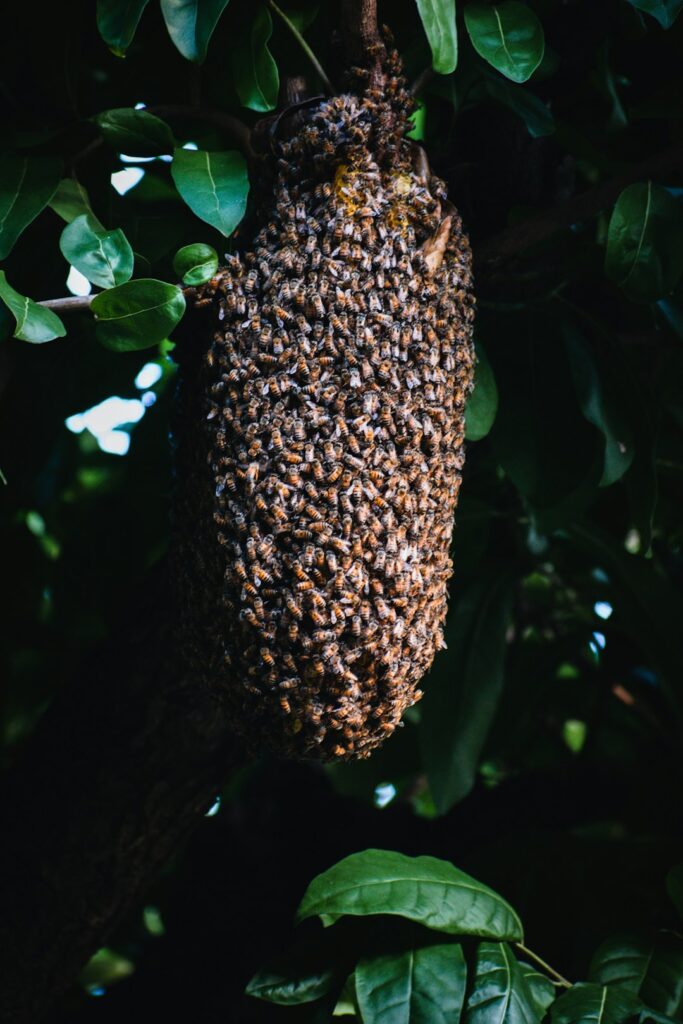
A honey bee swarm can look alarming, but it is often a temporary stage in the colony’s natural reproductive cycle. In Miami, FL, warm weather allows bees to remain active for much of the year, so residents may notice swarms on tree branches, fences, roof edges, utility structures, or building exteriors.
A swarm should still be treated cautiously. Honey bees may become defensive if disturbed, and it is not possible to identify Africanized honey bees by appearance alone. Safe removal depends on first determining whether the bees are resting temporarily or have already established a nest.
What is the difference between a swarm and an established colony?
A swarm is a temporary cluster of bees gathered around a queen while scout bees search for a permanent nesting site. An established colony has settled into a cavity or protected structure and is actively building comb, raising young, and storing honey.
A swarm often appears as:
- A compact mass hanging from a branch, fence, wall, or other surface
- Bees gathered in a cluster for several hours or sometimes longer
- Limited bee traffic entering and leaving a specific opening
- Little or no visible comb
An established colony is more likely to show:
- Steady bee movement through a crack, vent, soffit, tree cavity, or wall opening
- Bees flying in and out along a regular path
- Visible wax comb
- Honey odor, staining, or dripping from a wall or ceiling
- Activity continuing at the same location over multiple days
This distinction matters because a temporary swarm may be collected from the outside, while an established colony usually requires access to the cavity and removal of bees, comb, brood, and honey.
Step 1: Keep people and animals away
The first step is not approaching the bees. Residents should move children, pets, and anyone with a known sting allergy indoors or to another part of the property.
Avoid:
- Spraying the cluster with water, pesticides, or household chemicals
- Throwing objects or shaking the branch
- Mowing, trimming, drilling, or doing construction nearby
- Blocking the bees’ entrance if they are using a wall or structure
- Standing directly beneath a cluster
Most swarms are less defensive than an established colony because they are not protecting stored honey or developing young. That does not make them harmless. Sudden movement, vibration, heat, smoke, or repeated disturbance can change their behavior quickly.
If bees begin pursuing people, enter a building, or create an immediate threat near a doorway, roadway, school area, or heavily used yard, leave the area and seek emergency assistance when necessary.
Step 2: Observe from a safe distance
A useful assessment can be made without touching the bees. From indoors or a distant location, note:
- Where the bees are clustered
- Whether they are entering a hole or cavity
- How long they have been present
- Whether the group is growing or moving
- Whether anyone has already been stung
- Whether the bees are near air-conditioning equipment, electrical components, playgrounds, or entrances
A photo taken from a safe distance may help an experienced remover understand the situation, but trying to photograph the bees up close is not worth the risk.
In humid conditions, bees may choose protected spaces such as wall voids, attics, soffits, meter enclosures, roof structures, tree hollows, or gaps around outdoor equipment. A small opening can lead to a much larger hidden nest.
Step 3: Confirm whether the insects are honey bees
Honey bees are often confused with wasps, hornets, and yellow jackets. Honey bees generally have a fuzzy appearance and a rounded body, while many wasps have smoother bodies, narrow waists, and more vivid yellow or black markings.
Correct identification affects the removal method. A bee swarm may be collected alive, while a wasp nest may require a different approach. Residents should not rely on color alone, especially because Africanized and European honey bees cannot be reliably distinguished by sight. Their behavior and genetic background require proper evaluation.
Step 4: Plan the removal method

For a hanging swarm, the removal plan usually focuses on collecting the bees and locating the queen. A container or temporary hive box may be positioned beneath the cluster, and the bees may be gently guided or shaken into it. The remaining bees often follow once the queen is contained.
The exact method depends on the height, size, location, weather, and behavior of the swarm. A cluster on a low branch is very different from one attached to a roof edge, utility structure, or tall tree.
For an established colony, the process is more involved. Access may require opening siding, soffits, drywall, roofing materials, or other parts of a structure. The bees are removed along with:
- Wax comb
- Developing brood
- Stored honey
- Debris and nesting material
Removing only the visible adult bees is not enough. Remaining comb and honey can attract new bees, ants, roaches, rodents, or other pests. In warm weather, exposed honey can also melt, leak, and create stains or odors inside building materials.
Step 5: Collect and relocate the bees when appropriate
A live removal may be possible when the colony is accessible, manageable, and not creating an unacceptable public safety risk. Collected bees can sometimes be transferred into a hive box and moved to a managed apiary.
The receiving container must provide ventilation and protection while the bees settle. The colony may be monitored to confirm that the queen and enough worker bees were collected. Not every swarm can be safely relocated, particularly when it is high above the ground, located inside a dangerous structure, or showing unusually defensive behavior.
In Florida, live honey bee removals and colony eradication are handled under state requirements. The person performing the work should have the registration or licensing required for the specific method being used.
Step 6: Seal and repair the nesting site
After bees are removed, the original entry point should be closed only after the cavity has been cleared. Sealing an opening while bees remain inside can force them into walls, ceilings, or other parts of the structure.
Effective exclusion may involve:
- Removing leftover comb and honey
- Cleaning contaminated surfaces
- Replacing damaged insulation or building materials
- Repairing gaps around vents, roof edges, pipes, or utility penetrations
- Installing durable screening where appropriate
- Sealing cracks that could serve as future entry points
Miami’s heat and humidity make follow-up especially important. A small gap that appears insignificant during one season can become an attractive nesting entrance during another period of bee activity.
What should residents do after removal?
For several days after removal, watch the former nesting site from a distance. A few returning bees may be stragglers, but continued traffic through a crack or cavity can indicate that part of the colony, comb, or queen remains.
Do not immediately pressure-wash, paint, drill, or remodel the area until activity has stopped and the structure has been checked. If anyone was stung, monitor for signs of a serious allergic reaction, including trouble breathing, swelling of the face or throat, dizziness, or widespread hives. Emergency medical help is appropriate for those symptoms.
The safest response to a swarm is calm observation, distance, and a removal plan based on the bees’ actual location. A temporary outdoor cluster may be resolved without disturbing the property, while a colony inside a wall, roof, attic, or utility space requires careful removal of both the insects and the materials that supported the nest.