

 See My Latest Article on HelloNation
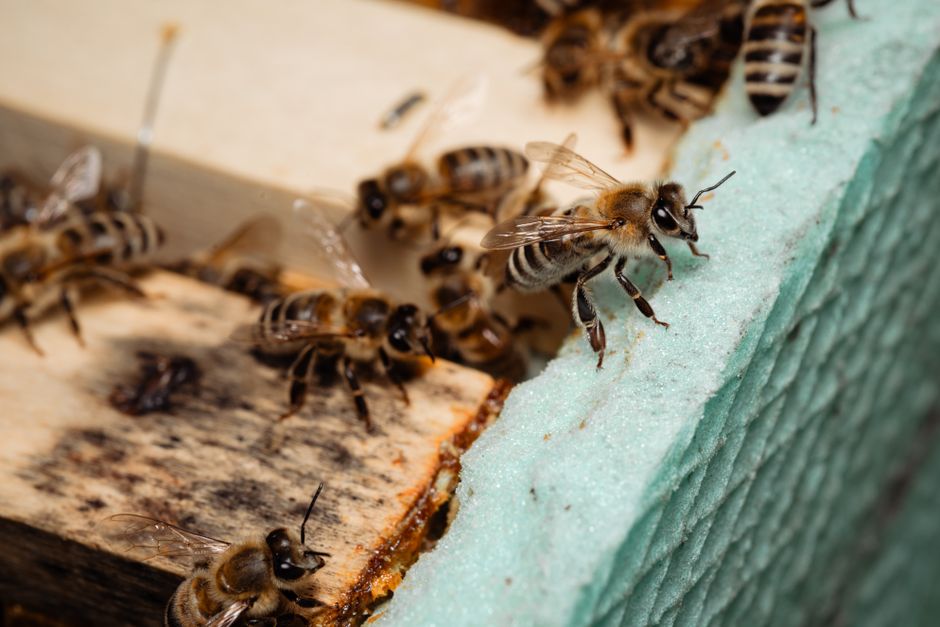
Bees can establish colonies inside walls, attics, soffits, chimneys, utility boxes, roof overhangs, and other protected spaces. In Miami, FL, warm temperatures allow bee activity during much of the year, so a colony may remain active long after residents first notice a few insects.
A visible swarm is not the only warning sign. Repeated bee traffic, unexplained buzzing, honey odors, stains, and changes inside walls can all indicate that bees have moved into a structure.
What does a bee colony inside a home look and sound like?
The clearest signs are repeated bee movement and a steady humming sound near one part of the structure.
A few bees near flowering plants or outdoor trash do not necessarily indicate a colony. Colonization is more likely when bees follow a consistent route to an opening and continue doing so over several days.
Look for:
- Bees entering and leaving the same crack, vent, soffit, roof edge, wall opening, or gap around a pipe
- A steady stream of insects during warm daylight hours
- Buzzing that is strongest near an interior wall, ceiling, attic, chimney, or exterior utility area
- Bees appearing indoors near light fixtures, windows, vents, or ceiling corners
- Increased activity during warm, sunny periods
The sound may be faint at first. As the colony grows, the humming can become noticeable through drywall or ceiling materials. Standing close to an active entry point can also cause bees to react defensively.
Does seeing bees near the house mean they have colonized it?
Not necessarily. Bees commonly visit gardens, flowering trees, landscaping, outdoor kitchens, pool areas, and uncovered food or drinks without nesting in a structure.
The difference is persistence and direction. Foraging bees usually arrive from different directions, collect food or water, and leave. Nesting bees repeatedly travel to one fixed opening.
A temporary swarm may also gather on a tree branch, fence, screen, vehicle, or exterior wall while searching for a permanent nesting site. A swarm can remain for hours or longer, but it does not automatically mean bees have entered the home.
More concerning signs include:
- The same entry point being used every day
- Bees carrying pollen into an opening
- Bees disappearing into a wall or roof space
- Activity continuing after the visible cluster has dispersed
- Bees emerging from several nearby cracks or openings
What are the less obvious signs of bees inside a wall?
Some colonies are hidden behind finished surfaces, making the first clues indirect. Residents may notice odors, discoloration, or insects in unusual places before they see the nest.
Possible signs include a sweet, waxy, or honey-like odor near a wall or ceiling. Warm conditions can make stored honey and wax easier to smell, particularly in enclosed spaces.
Other clues include:
- Yellow-brown or amber staining on drywall, paint, trim, or ceiling materials
- Softened, bubbling, or discolored paint
- Sticky areas around wall cracks or ceiling joints
- Small pieces of wax or dead bees near an opening
- Bees appearing around recessed lights, electrical outlets, air vents, or plumbing penetrations
- Ants, roaches, or other insects gathering near a suspected wall void because of honey or wax
Staining does not prove that bees are present. Roof leaks, plumbing problems, humidity, and condensation can create similar damage. However, staining combined with bee traffic deserves careful attention.
Can bees live in an attic, chimney, soffit, or roof?
Yes. Bees often choose cavities that are dark, dry, protected from rain, and large enough to hold comb. Common structural locations include attics, soffits, fascia boards, chimneys, roof overhangs, wall voids, crawl spaces, sheds, and abandoned equipment enclosures.
In homes with tile or shingle roofing, small gaps along roof edges can provide access. Older structures, damaged screens, uncapped chimneys, and deteriorated vents may offer additional entry points.
A colony may also use spaces around air-conditioning lines, electrical conduits, plumbing pipes, or attic insulation. Miami’s heat can make roof and attic spaces especially attractive to bees seeking a sheltered cavity, although extreme heat can also cause honeycomb to soften or fail.
Do not seal an opening while bees are still inside. Trapping a colony behind a wall or roof surface can force bees into the living area and may leave honey and comb inside the structure.
Why are bees suddenly appearing inside the house?
Bees may enter living spaces through small gaps that connect to a nest cavity. As the colony expands, crowded conditions can push bees through openings around light fixtures, vents, window frames, or damaged drywall.
Another possibility is that a swarm has entered through an open door, window, attic vent, or damaged screen and is temporarily searching for a nesting location.
The pattern can help distinguish the two situations:
- Bees repeatedly emerging from one interior opening suggest a nearby colony.
- Bees scattered throughout a room may have entered accidentally or followed light.
- Bees gathering near a ceiling or wall may be responding to warmth, light, or a nest cavity behind the surface.
- Dead bees on windowsills may indicate indoor entry, pesticide exposure, or a colony problem nearby.
Avoid spraying household insecticide into cracks, outlets, vents, or wall openings. This can contaminate indoor air, drive bees into other parts of the structure, and complicate safe removal.
Are bees near a pool, patio, or outdoor kitchen a sign of colonization?
Outdoor activity may indicate a nearby colony, but it is not conclusive by itself. Bees need water, and pools, fountains, dripping outdoor fixtures, irrigation equipment, and damp areas can attract them.
Food and drink also draw foraging bees. Open soda cans, fruit, sweet sauces, uncovered trash, and food left outdoors may bring bees close to people even when the colony is located elsewhere.
A stronger indication of colonization is a regular flight path between the outdoor area and a specific structural opening. Watch from a safe distance rather than approaching the opening or blocking it.
What should residents do if they suspect a colony?
Keep people and pets away from the suspected entry point. Do not tap on walls, use smoke, shine bright lights into openings, or attempt to remove comb. Vibrations and disturbance can increase defensive behavior.
Keep windows and doors closed in the affected area, especially if bees are entering through the ceiling or wall. If bees are inside a bedroom or living area, leave calmly and close the door behind you.
Documenting the location from a distance can be useful. Note:
- The exact entry point
- The time of day activity is highest
- Whether bees are entering or leaving
- Whether buzzing is heard indoors
- Any odor, staining, or visible wax
- Whether anyone in the household has a serious bee-sting allergy
Medical help is necessary for severe reactions such as difficulty breathing, swelling of the face or throat, dizziness, vomiting, or widespread hives. A person with a known severe allergy should follow the emergency plan prescribed for them.
Because opening walls, handling comb, and dealing with a defensive colony can create safety and building-damage risks, structural colonies generally require an experienced, legally compliant removal approach rather than a do-it-yourself treatment. The colony, comb, honey, and any contaminated materials may all need attention so that bees do not return and stored honey does not attract other pests.
How can future nesting be discouraged?
After the colony issue has been safely resolved, potential entry points can be repaired. Useful preventive work may include replacing damaged screens, covering vents with appropriate barriers, repairing soffits, sealing gaps around pipes, and correcting roof or fascia damage.
Sealing should occur only after confirming that bees are no longer inside. Closing an active opening too early can trap the colony and create a more difficult problem inside the structure.
Regular inspection is especially worthwhile after storms, roof repairs, exterior remodeling, or periods when unusual bee activity has been noticed. A small gap that seems insignificant to a resident may be large enough for bees to use repeatedly.